

2026 Small Business Advocacy
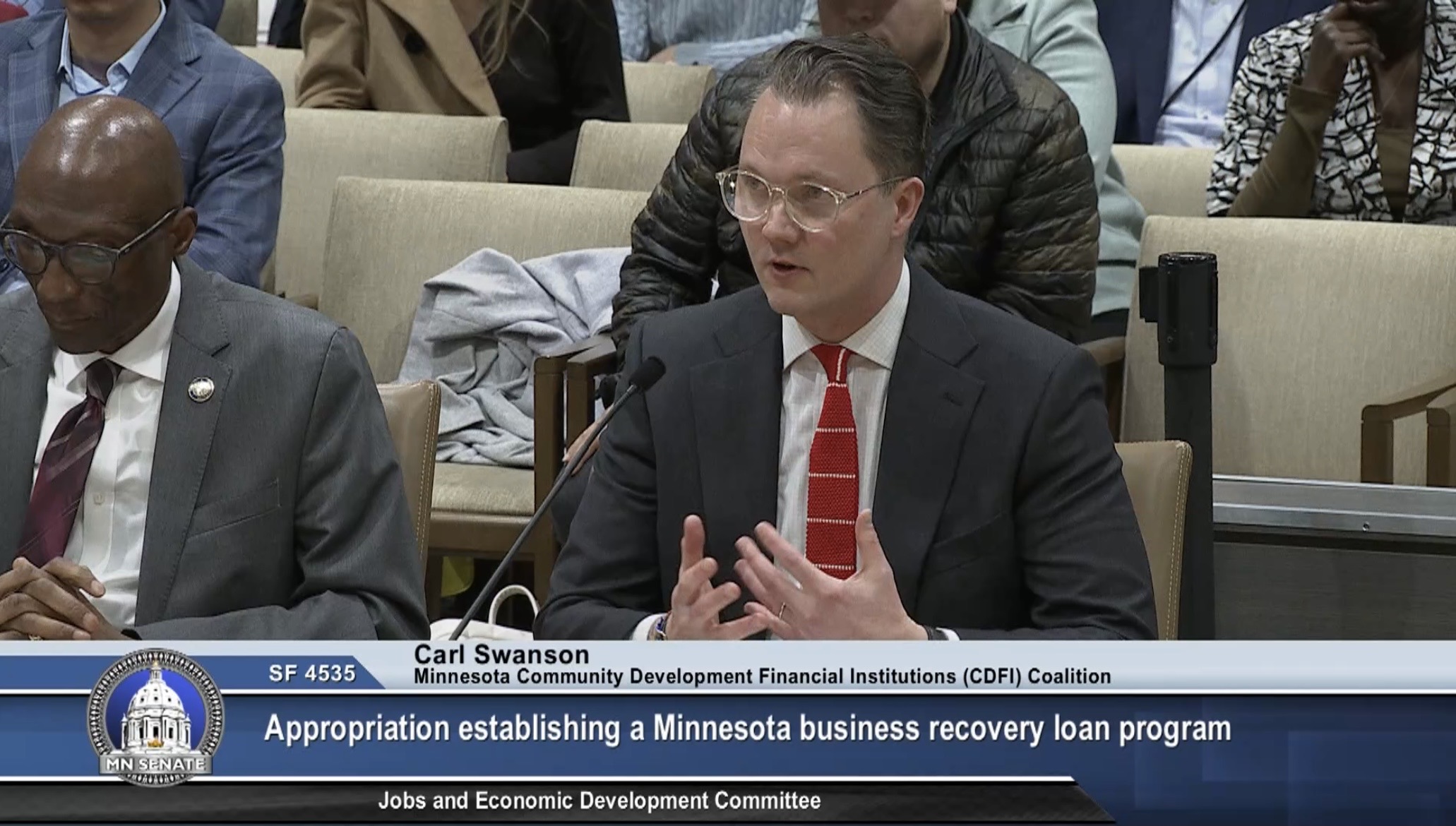
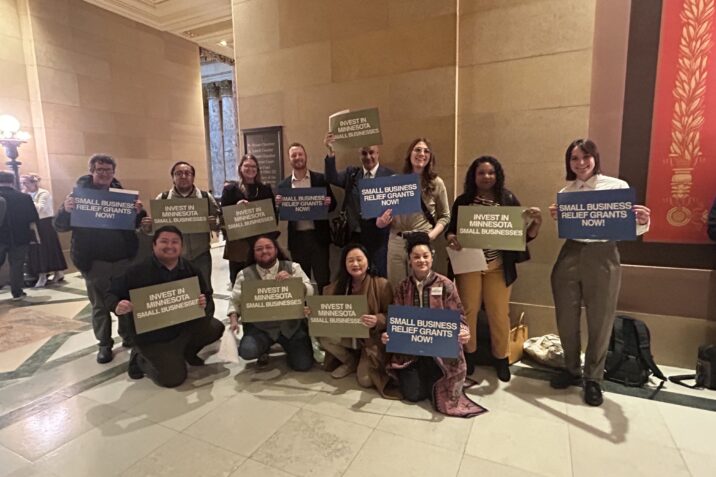
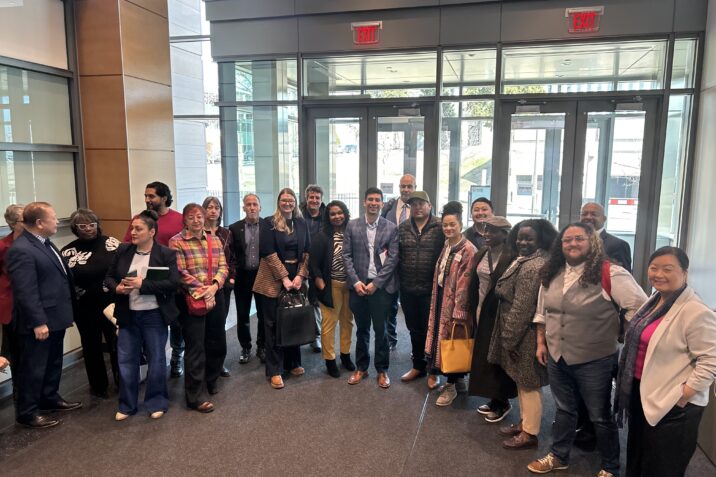
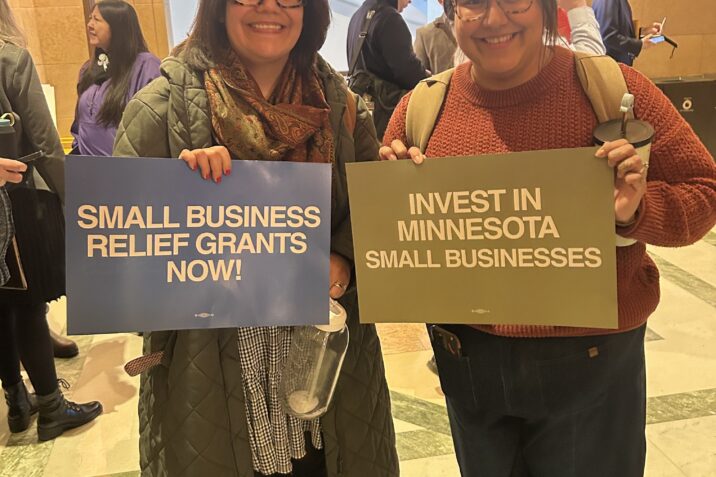
Monday, March 2026 was a busy day for CDFIs at the Minnesota State Capitol! The Minnesota CDFI Coalition joined with our members and partners to advocate for small business relief funding. The Coalition provided testimony at the Senate Jobs and Economic Development Committee, and met with House representatives. Find out more about the advocacy efforts here.
Senate Jobs and Economic Development Committee Testimony, 03.23.2026 – watch or listen to it it here. (Minnesota CDFI Coalition testimony begins at 1:26:00)
Full Testimony
Good afternoon, thank you for this opportunity to speak on the importance of small business relief. My name is Carl Swanson, I am the Coalition Strategist for the Minnesota CDFI Coalition. CDFI stands for Community Development Financial Institution, this is a federal certification through the US Department of the Treasury.
With over 35 certified CDFIs and CDFIs in process in Minnesota, these are organizations providing small business support, affordable housing development, and capital to under-resourced, under-banked, and under-financed communities in cities and rural places across the state.
If you don’t know the acronym CDFI, you know these organizations – Habitat for Humanity of Minnesota, Greater Minnesota Housing Fund, Neighborhood Development Center, WomenVenture, Metropolitan Economic Development Association, Latino Economic Development Center, Initiative Foundation Impact Fund in Central Minnesota, Entrepreneur Fund out of Duluth, and many others. And you definitely know businesses that have benefited from the support of CDFIs.
The Minnesota CDFI Coalition is here today because CDFIs are partners to businesses at the start-up stage, partners to banks, and philanthropy to help grow opportunity and prosperity, and partners to local, state and the federal government to connect communities to capital, resources and training. CDFIs have rigorous certification and reporting requirements, making these organizations trusted, responsive, and ideal intermediaries. We are often the first money in for entrepreneurial ideas, the cheerleaders for small business and for entrepreneurs building from the ground up, and we are often the partners to help bring projects home by closing financing gaps. CDFIs come in when others cannot or will not, because we know the value of investing in community.
These close connections to community and small business also mean that CDFIs are economic first responders, directly connected to disruptions and downturns. We have invested time, capital, and relationships in Minnesota’s Main Street, when someone is hurting, we know. Over the past months, Minnesota’s small and Main Street businesses have experienced drastic, unnecessary, unasked for, and undeserved disruptions.
CDFIs have been responding to slowdowns in foot traffic in small businesses, workforce shortages as employees stayed home out of fear, and an inability to operate with the freedom necessary for stable commerce. You will hear directly from small business owners today, and the stories people are sharing about their businesses suffering are personal to us, the losses we are seeing have real impacts on individual businesses and on the CDFI sector.
In 2025, Minnesota CDFIs had almost $700 million dollars invested through 2400 loans out across the state. That is $700 million split between small businesses and affordable housing, which is critical for Minnesota’s economy. Shocks to our small business, agriculture, and construction sectors are a direct threat to that capital through delayed payments and defaults.
Research from the Minnesota CDFI Coalition in partnership with GreaterMSP mapped 14 corridors in the Twin Cities metro with the highest impact and estimated losses of $213 million in revenue over a 10 week period from December to February. This tracks with the City of Minneapolis’ estimate of $81 million in revenue lost in January 2026. North Star Policy just released research estimating a $626 million drop in consumer spending across Minnesota in January 2026, and a 2.8% drop in employment and an estimated $106 million in lost wages in the metro area in the first six weeks of 2026.
As we get more data from the first quarter of the year, we expect these economic hits to revenue, wages, and tax bases to become more apparent, and to have a clearer picture of the real losses in employment and labor force participation.
It is important to note that while we have more direct, quantitative impact estimates from the metro area, we know there has been Main Street disruption across the state, in Willmar and Worthington, Forest Lake and Fergus Falls, St. Cloud, Red Wing, Rochester, St. Peter, Brainerd, and more.
In this moment, many of our CDFIs are talking to clients about flexibility in loan terms, restructuring debt, extending project timelines, and doing all we can to mitigate harms and losses. CDFI organizations have been stepping up and stepping in to support their clients, staff, and communities, standing up emergency relief funds, providing technical assistance, and partnering with philanthropy to distribute aid. Mutual aid stepped up, philanthropy has stepped up, and now it is the State’s turn to support Main Street. Recovery, stability, and vitality will take investment.
Small business is critical to Minnesota’s success, and CDFIs are trusted, necessary partners in this work. The Minnesota CDFI Coalition wants to thank Chair Champion for his leadership and commitment to small business support and prosperity, and bringing forward SF 4535 for small business relief through zero interest loans. We want to thank Senator Pha for supporting Main Street through SF 4527, providing relief grants to small businesses. The time to act is now, to support Minnesota’s small business sector and economic vitality. Thank you.